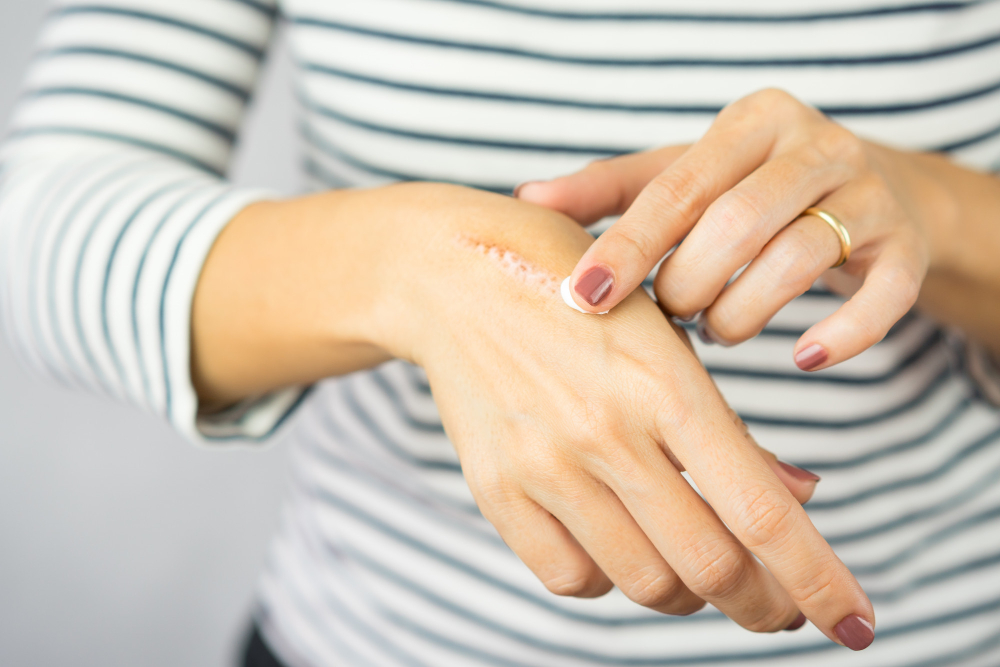
Scar management is the process of caring for scars to help them heal better and look less noticeable. Many people want to know how to reduce scars or find the best scar treatment. Because scars can affect both appearance and confidence, learning about scar management is important. With the right steps, you can support healthier skin and prevent new scars from forming.
What Are Scars?
Scars are marks left on the skin after it heals from an injury. For example, you might get a scar from a cut, burn, or surgery. There are different types of scars, and each looks a bit different. Some common types include:
Although most scars are harmless, some can cause discomfort or itching. Others may affect how you feel about your appearance.
Common Causes of Scars
Scars can form for many reasons. For instance, you might get a scar from:
Because everyone’s skin heals differently, some people may scar more easily than others. However, taking care of wounds right away can help reduce the risk of scarring.
How Scars Form: The Healing Process
When your skin gets injured, your body starts to heal the area. First, blood clots form to stop bleeding. Next, new tissue grows to close the wound. Over time, the body makes more collagen, a protein that helps repair the skin. As a result, a scar forms where the injury was. Although scars may fade, they rarely disappear completely. Still, with proper scar management, you can help them heal better and look less visible.
Scar Management Techniques
There are many ways to manage scars. Some methods work better for certain types of scars. Here are some effective scar management techniques:
Because every scar is different, you may need to try more than one method. Always follow your doctor’s advice for the best results.
Lifestyle Tips for Scar Prevention and Care
Although you cannot always prevent scars, you can take steps to care for your skin. For example, try these tips:
In addition, avoid harsh chemicals or scrubbing the scarred area. With gentle care, you can help your skin heal and reduce the chance of new scars forming.
When to See a Dermatologist
Sometimes, scars can be painful, itchy, or affect how you feel about your appearance. If your scar is not healing, looks infected, or is getting worse, you should see a dermatologist. Also, if you want to know about the best scar treatment for your skin type, a skin doctor can help. Early advice can make a big difference in scar management and help you get the best results.
In summary, scar management is important for healthy, confident skin. With the right care and support, you can help scars heal better. Consult Dr. Pooja Tatapudi for personalized scar management advice.